Best of Leh-Ladakh - Tour Package - (7 days)
"The mountains are calling and I must go." – John Muir
Ladakh’s the best trekking destination in India. You will pass through villages grouped around the edge of the cliffs, bright blue lakes, and old monasteries, which still feel like places untouched by time. If you have 3 days or 3 weeks, there’s a trek here for you.
Ladakh Tour Package
For beginners to trekking or for the kids, select an easy path. These run between pretty villages and green valleys, and they do not put your physical body at all. For an extra challenge, you can also venture on longer routes that cross higher passes (some over 5,000 metres). To set up the challenge even higher, you can even mix a trek with climbing up a 6000m peak!
Enjoying your honeymoon or going to travel with a few friends? Group treks with predetermined dates are available. A fun opportunity to meet new people on the trek and to share expenses.
There’s a time to do it, and it is important that the timing is right. The best months to trek in Ladakh are June to September, when the weather is good and the trails are open. Several of the higher routes are not accessible in the winter unless the passes are open when it snows. If you’re a winter enthusiast, you’d have two special treks to walk over the frozen Zanskar River called the Chadar trek from January to March, and the Snow Leopard trek, also between January and March.
1. Markha Valley Trek

The trek inside the Hemis National Park is the most favored in Ladakh. Stok Kangri peaks, mountains covered with snow, lie along one side of the valley, and the Zanskar range lies on the other side of the valley, which runs parallel to the Indus Valley. There will be magnificent views, the opportunity to see some wild animals, and small, quiet villages set in green barley fields as you slowly stroll along the walk.
It is a wonderful trek because of the homestays we stay in on the route. It is a fabulous opportunity to unwind, enjoy home cooking and experience life in these remote mountain villages firsthand.
It is a wonderful trek because of the homestays we stay in on the route. It is a fabulous opportunity to unwind, enjoy home cooking and experience life in these remote mountain villages firsthand.
The route has typically been a 6-8 day hike, and the time will vary due to the point of beginning. You may start with either Spituk or Chilling. The longer route is the Spituk route, traversing two high passes (Ganda La (4961m) and Kongmaru La (5260m)) at the end, at Hemis. A slightly quicker and less daunting option is to depart from Chilling, as you’d get an experience of the Markha Valley without having to lace through the Ganda La pass.
Best time: mid-May to the beginning of October
Duration: 6 to 8 days
Difficulty: level 3
Max altitude: 5260m
2. Kang Yatse II climb
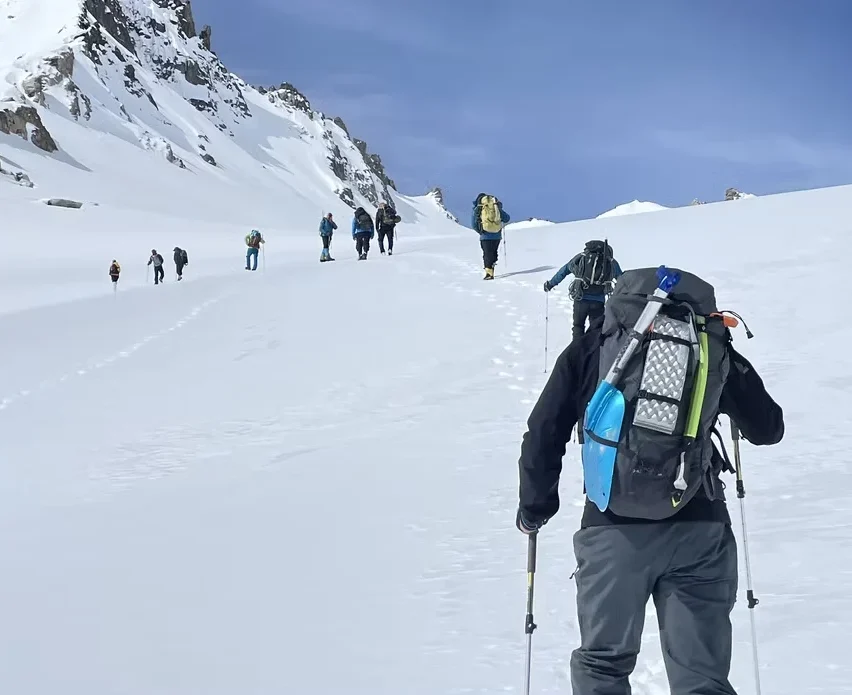
Another peak in Hemis National Park of 6000m and above is the Kang Yatse, which is a good alternative to Stok Kangri. Many actually feel that Kang Yatse’s twin peaks are much more fun and even better in and around the area! The mountain is close to Nimaling town and Kongmaru la pass so it is easy to make it a part of a Markha Valley trek for an extra adventure.
The Kang Yatse climb is usually combined with the Markha Valley trek. This will allow you enough time to acclimatize yourself gradually to the altitude before you get to base camp and head up to the top. Kang Yatse is also more difficult to reach than Stok Kangri and consequently is only visited by a few parties annually. This way, it seems more distant and more special, off the beaten path.
Best time: end of June to end of September
Duration: 9 to 10 days
Difficulty: level 5
Max altitude: 6200m
3. Rumtse to Tso Moriri trek
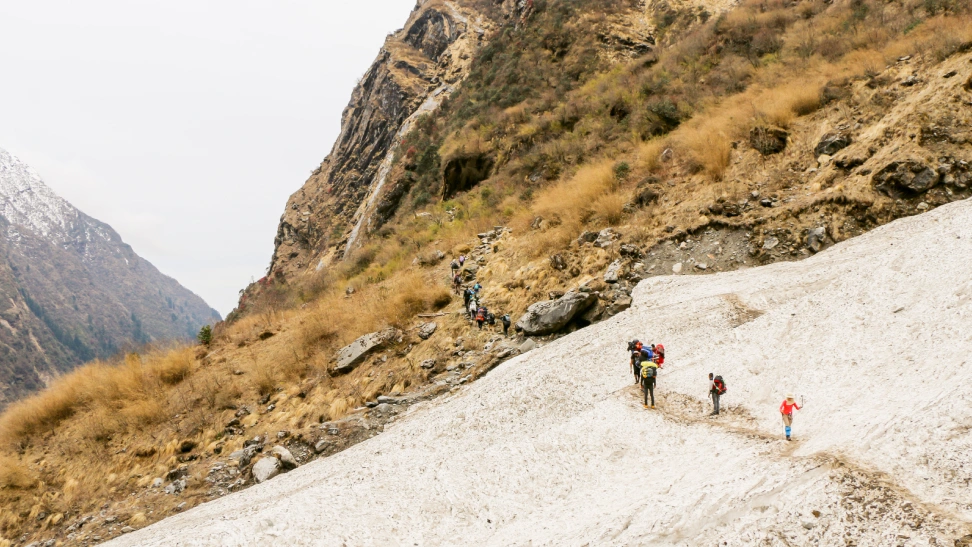
For those who enjoy dramatic scenery, then the Rumtse to Tso Moriri trek is recommended. One of the most lovely and wild hike in Ladakh. The week-long journey is through the high and open plateau region of Changthang (Rupshu) with its scenic beauty. However, as you ascend over 5000 metres on 6 passes, you will be able to see the mountains vary in shape, texture and colour. Despite being a cold desert, there are a few spectacular lakes in Ladakh. On this trek, you will witness two gorgeous lakes – Tso Kar and Tso Moriri – which you will surely not forget.
It’s an uphill ride for this trek as at the first night you will be at 4,500 metres and will be in the altitude range between 4500 and 5500 metres throughout the next 6 days. Thus, it is extremely crucial to be well acclimatized prior the trek. It is better to take a few days to acclimatise oneself to the trail before heading out in Leh.
Best time: mid-June to beginning of October
Duration: 7 days
Difficulty: level 4
Max altitude: 5435m
4.Phyang to Hunder Trek
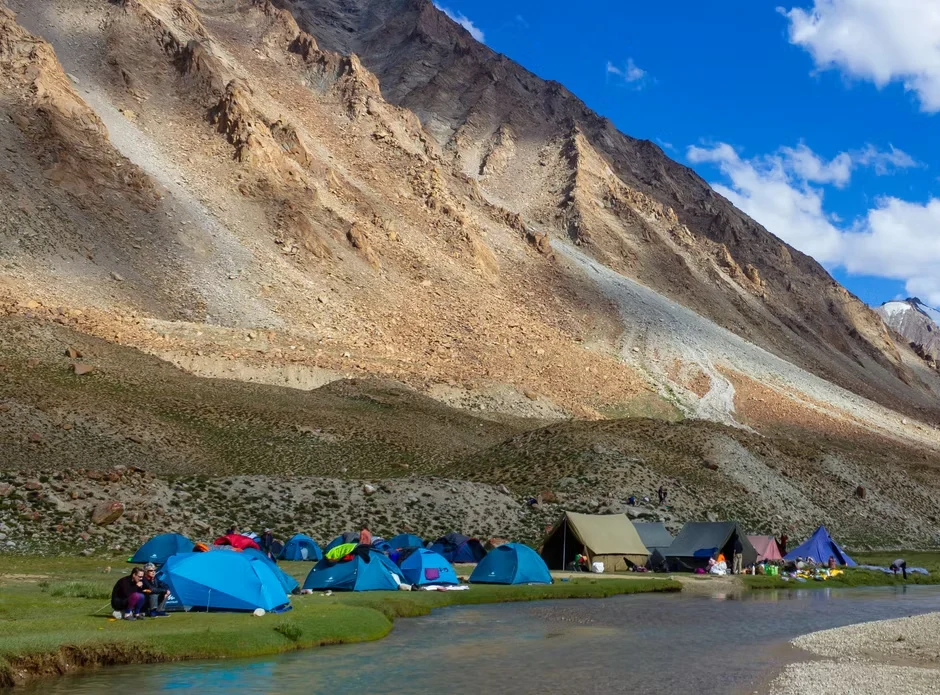
The route from Phyang to Hunder is a link between two beautiful areas, Indus valley being on one end and Nubra valley on the other. This hike follows a good old trade route; it used to be part of the famous Silk Road connecting India to Central Asia, almost a millennia ago. This trail is one that is easy to visualize traders and caravans crossing these very mountains well before the use of modern roads!
This is mainly a walk in the snow ice-filled summer, as Lasemo La pass (5438m) glistens all summer. You get a great view of the Karakoram range in front from the here. This hike is still not as popular and widely known as others, so although it will be familiar to some, many others will feel it is a wild and serene hike. You’ll be able to see the whole thing in only 5 days, so perfect for those who are pressed for time but wish for an actual adventure.
Best time: mid-July to end of September
Duration: 5 days
Difficulty: level 3
Max altitude: 5438m
5. Zanskar trek
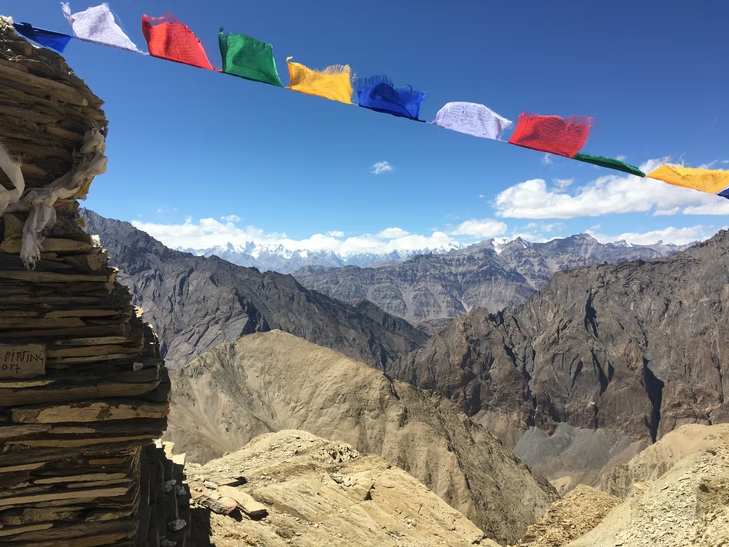
This is what makes Zanskar special that it is one of the most remote parts of Ladakh. Embedded for most of the year, this remote area has maintained its pristine beauty and old-fashioned lifestyle. Traveling here is like going in a different time and place, away from the hustle and bustle of the city.
The beauty of the mountains in all hues, coupled with the unique and rich cultural enchantment, makes Zanskar one of the most remarkable places to visit in Ladakh. Three major passes – Hanuma La (4724m), Singge La (5009m) and Sir Sir La (4832m) – offer glimpses in between, and a renewed sense of achievement.
Best time: mid-June to beginning of October
Duration: 10 days
Difficulty: level 4
Max altitude: 5009m
Why Choose Ladakh Traverse for Your Ladakh Adventure?
The combination of local expertise and passion for the Himalayan region by Ladakh Traverse ensures tours that go beyond the tourist route. Led by an expert team of guides, many of whom are native to Ladakh’s remote valleys, you will safely enjoy the region’s raw landscapes, ancient monasteries, and vibrant culture. Whether it’s a high-altitude trek or a road trip towards Pangong Lake and Nubra Valley, each trip is carefully planned for a perfect mix of adventure and comfort.
We aim to be sustainable travellers, supporting local communities and homestays, and to have a low impact on the environment we are travelling in. We have well-designed vehicles, staff with expertise, and ultra-sleek travel plans that are flexible based on your interests and availability, so we take the hassles out of travel planning.
We offer a unique and personalized Ladakh experience, from spiritual peace and calm to adrenaline-rush-filled adventures and mesmerizing photography opportunities; the best way to enjoy these is when we arrange it for you!